


Safe LI Refuge for Immigrants and Refugees


Our Mission
At the heart of the Long Island Immigration Clinic's mission is a commitment to being a welcoming presence to all undocumented immigrants living on Long Island who need our support and services.
This mission has a three-prong focus:
- To assist these individuals in gaining legal status to remain in this country,
- To educate them in their legal rights,
- To guide each person in becoming a successful advocate on their own behalf in court proceedings, as well as the broader immigration forum, and the communities in which they live.
The Need
Through its experience serving immigrant communities, the Long Island Immigration Clinic (LIIC) Advisory Board recognized a major gap in services on Long Island for newly arrived immigrants. LIIC was founded to meet this need - offering guidance and support for asylum applications and other immigration processes. Our model is inspired by successful Pro Se clinics operating in the New York City area, adapted to serve the specific needs of Long Island residents.
The need is significant. As of mid-2023, the United States was home to 51.9 million immigrants, representing 15.4% of the nation’s population. In 2022 alone, the foreign-born population grew by nearly 912,000, accounting for 65% of total U.S. population growth. Each year, countless families arrive seeking safety and opportunity, often without access to affordable legal assistance.
At LIIC, we believe these individuals are vital members of our community. Our model ensures that every person seeking help is treated with dignity, compassion, and respect. By offering accessible legal guidance, we empower immigrants to understand their rights and build stable futures for themselves and their families. Together, we’re creating a stronger, more inclusive Long Island where everyone has the chance to thrive.


How It Came To Be
2016
The LIIC was a vision created in partnership with immigration advocates across Long Island. The initial seeds were planted in 2016, when there was a dramatic increase in the arrest and detention of undocumented persons in ICE raids on Long Island. Several local organizations became involved in the creation of a Rapid Response Network which spanned across Nassau and Suffolk counties, whose goal was to mobilize quickly when these unannounced raids would occur in individuals’ communities. Volunteers were trained in accompaniment work, walking alongside and empowering undocumented immigrants to represent themselves at federal court hearings and other appointments. Pro se clinics began to develop and open in New York City, but there was no counterpart on Long Island.
2020
In response to this growing need of those living on Long Island, in September 2020, an Advisory Board was formed to work specifically on the creation of the Long Island Immigration Clinic. The founding Advisory Board included members of religious congregations and the LI Episcopal Diocese, as well as local organizations providing direct support and advocacy to the immigrant community. The Advisory Board’s initial purpose was to assist the program in becoming operational, with its primary goal to provide community members free assistance in preparing their asylum applications and employment authorization documents. The program model would be largely volunteer-driven, with the assistance of immigration attorneys who would provide supervisory support.
2021
In January 2021, the Sisters of St. Joseph offered to be the clinic’s fiduciary sponsor, and they provided space on their Brentwood campus which was renovated by them for the clinic’s operations. The following year, after discussions with the Advisory Board, the clinic became an official ministry of the Congregation. The clinic hired its first employee in September 2021, and after training its first cadre of volunteers, The Long Island Immigration Clinic officially launched in the first Quarter of 2022.
Beginning in 2021, after being asked by a Long Island interfaith council, the Sisters opened their campus to house people affected by war and terror in their homelands.
[see links inside the article cited below]
Editor's note: The yearlong GSR series "Hope Amid Turmoil: Sisters in Conflict Areas" has focused on sisters' ministries serving those who live in areas affected by war and civil conflict. Today's piece takes a different angle: examining a sisters' ministry on Long Island, New York, which is helping refugees who have arrived in the United States from conflict-affected countries like Afghanistan and Ukraine. Publishing the story this month is appropriate — Sept. 24 is the church's annual World Day of Migrants and Refugees.
The answer was an affirmative yes.
With Afghanistan's fall to the Taliban in August 2021, the Sisters of St. Joseph of Brentwood, New York, were asked by contacts on Long Island's interfaith community if "the nuns" had any extra space on their campus to house incoming refugees.
The sisters said they did. So, in December 2021, the doors of the congregation's large campus on central Long Island opened — and "opened wide" as several sisters say — and have remained so for nearly two years now.
What began as a small initiative to welcome a few refugees has now become a growing and sustained program that has housed 23 adults and 16 children from three countries — Afghanistan, Pakistan and Ukraine — on a large 211-acre campus with more than a dozen buildings.
Related February 2026 posts
We begin with a light dusting of word play & transition to deeper drifts...shifts of consciousness...Eastern & Western...of course, there are tunes...
Wandering from hypocrites to hip hop, we explore our current immigration situation...
Offering Long Islanders a safe source for their immigration questions.
In their own words, we hear their stories of unfair treatment...
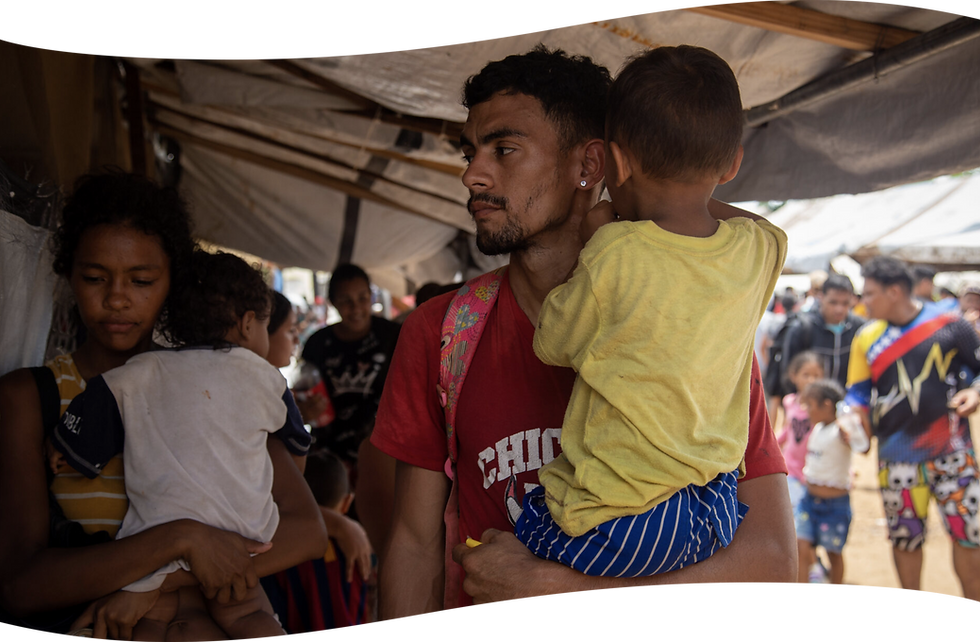
In the style of Visio Divina, a look at the faces of those trying to find a better life for themselves and their families...
The New Colossus - Emma Lazarus (01:27) #immigration #SocialJustice #SocialInjustice #EmmaLazarus #StatueOfLiberty
NOW is the time for the ethical treatment of undocumented workers


Comments