


Everywhere I go I see your face...

Visitors: These reflections were prepared for a presentation to a monthly men's' group I'm part of in Brentwood, NY. This regular gathering developed from the early men's work of Richard Rohr.
I'm sharing the people and places that are helping me better know myself, others and the larger world in which we live.
Throughout these reflections, feel free to substitute your preferred names for "G-d."
OOOOOOOOOOOOOOOOOOOOOOOOOOOOOOOOOOOOOOOOOOOOOOO
Good Morning! I'm offering the current fruits of my inquiry into:
“How can I experience the presence of the Lord in this life.”
I'll be using songs and questions we can ask ourselves to help us find our own answers…
your g-d is too small...
For countless years, women and men have searched for answers. Some limited "G-d" to their particular "box" or tribe...as if divinity could be contained.
"Stuck inside these four walls..."
(Beatles)
Many, ascribe only a male gender to "g-d". Atheists say that there isn't a G-d. And agnostics, assert that it’s impossible to know how the universe was created and whether or not divine beings exist.

Another way to look at "presence" is how can we experience CONNECTION...
As I was preparing, whenever I started going into very deep waters, I heard a voice reminding me to keep it simple.
On Tuesday, that message was repeated by Eileen as we talked about the theme...
Most likely, all of us have received some form of religious information...So, our answers to questions I’ll pose are likely to be influenced by this early input.
To look at “experience of God” let’s ask ourselves a few questions.
--------> I’ll wait for your responses before going to the next question.
What is G-d? (wait for the men to answer then go to next question)
Where is G-d?
How do we try to describe G-d?
What does “Experience of G-d"..."Connection with G-d" mean to you?
At this place in your life, HOW are you trying to experience the presence of G-d?
WHY?
WHEN & WHERE do you have these experiences...these connections?

Why I’m curious about this topic...
My interest arises from looking outside and looking inside. Evolution...the expanses of space, the amazing complexity of our bodies...the inner world of our thoughts...
What’s the nature of the source?
Throughout these reflections, feel free to substitute your preferred name(s) for "G-d."
Since wiser folks than me have been exploring these deep waters forever...
...my inquiries have focused on those who hold and practice the mystical tradition.
My Roads to Connection...Trusting the trust of others I trust...

For nearly 50 years, I’ve walked along contemplative paths and have been fortunate to have as guides Thomas Keating, Richard Rohr, as well as others in non-Christian traditions. I’ve learned to value the experiences of those who walked before I became aware of a path and decided to get on one of them...
"We’re not throwing out our rational mind, but we’re adding nondual, mystical, contemplative consciousness."
[from the next link] We live in a time of both crisis and opportunity. While there are many reasons to be anxious, I still have hope. Westerners, including Christians, are rediscovering the value of nonduality: a way of thinking, acting, reconciling, boundary-crossing, and bridge-building based on inner experience of God and God’s Spirit moving in the world. We’re not throwing out our rational mind, but we’re adding nondual, mystical, contemplative consciousness. When we have both, we’re able to see more broadly, deeply, wisely, and lovingly. We can collaborate on creative solutions to today’s injustices. [1]
"The more you know...the more you realize you don't know..."
[from the next link] After the Protestant Reformation, the mystical path was largely mistrusted. Some would even say it was squelched because of Martin Luther’s (1483-1546) emphasis on Scripture as the only source of knowledge about God (sola Scriptura). To be fair, Luther’s contributions led Christians to an early stage “rational” use of the Scriptures as a corrective to Catholic over-spiritualization. Within his own Lutheran tradition, profound mystics arose such as the German shoemaker Jacob Boehme (1575–1624) and the inventor Emanuel Swedenborg (1688–1772).
In the following centuries, German academic theology flourished, relying almost exclusively on Post-Reformation rationalism. While theological study continues to be an immense gift to the world, one can easily get trapped inside of endless discussions about abstract ideas with little emphasis on experience or practice. In contrast, mystics honor the experience of the essential mystery and unknowability of God and invite us to do the same.
The more you know, the more you know you don’t know!
Accessing the Spiritual Level of our Being

“Contemplation is the easiest way to access the spiritual level of our being.”
[the following excerpts are from the next link]
“Contemplation is the easiest way to access the spiritual level of our being.”
Who am I? What is the meaning of life? Is there a God? If so, what's he like, or she
like, and so on? Is it personal or impersonal? All humanity shares these questions and the different cultural expressions of the religious question
So that one's relationship – as I spoke of earlier – with God needs to be flexible
enough to change, and every time it does have a breakthrough like that particular one –
there could be other breakdowns or signposts along the way – at some point, the need,
or the importance, of one of the other relationships is absorbed into a further, higher
penetration into the mystery of the Ultimate Reality.
The whole approach to God up to that point has to go through a 180-degree shift.
Where we thought of ourselves perhaps as pursuing God or seeking God – and we
needed to, in some ways, just to open to this deeper dimension beyond reason – so we
had to exhaust what possibilities of knowing God that reason can provide with the
help of religion and symbols that enable God to peep, you might say, or to slip
through, the cracks of words or symbols or gestures and to give us the sense that
there's more to this than meets the eye. So, it's the eye of faith that is the seeing eye, you might say, that penetrates the senses and events and sees God in everything. In other words, it sees not just the particular particle, so to speak, but it sees the Source of the particle which resides there at the same time. God is both distinct and indistinct at the same moment, with everything, and that includes ourselves.
Traditionally meditation in its conceptual form, which we call contemplation, mostly in
the Christian tradition, is perhaps the easiest way to access the spiritual level of our
being or the Ground of Being out of which we came, which is really the Divine
Presence and its creative energy and its continuing creation and accompaniment of us
as our human development advances.

“Are we separate from G-d or in union with G-d?”
“Unity” or “Separateness” Teachers of the mystical traditions frequently begin their reflections by looking at this question.
[from the next link] The great illusion we must all overcome is the illusion of separateness. It’s almost the only task of religion—to communicate not worthiness, but union; to reconnect us to our original identity...
Sin primarily describes a state of fragmentation—when the part thinks it’s separate from the Whole. It’s the loss of any inner experience of who we are in God. That “who” is nothing we can earn or obtain. It’s nothing we can accomplish or work up to. Why?
Because we already have it.
Another common inquiry is:
“Is G-d outside us or within us?”
[from the next link] When I was on retreat at Thomas Merton’s hermitage at Gethsemani Abbey in 1985, I had a chance encounter that has stayed with me all these years. I was walking down a little trail when I recognized a recluse, what you might call a hermit’s hermit, coming toward me. Not wanting to intrude on his deep silence, I bowed my head and moved to the side of the path, intending to walk past him. But as we neared each other, he said, “Richard!” That surprised me. He was supposed to be silent. How did he know who I was? “Richard, you get chances to preach and I don’t. Tell the people one thing.” Pointing to the sky, he said, “God is not ‘out there’!” Then he said, “God bless you,” and abruptly continued down the path.
The belief that God is “out there” is the basic dualism that is tearing us all apart. Our view of God as separate and distant has harmed our relationships with sexuality, food, possessions, money, animals, nature, politics, and our own incarnate selves.
Far too much of religion has been about defining where God is and where God isn’t, picking and choosing who and what has God’s image and who and what doesn’t. In reality, it’s not up to us. We have no choice in the matter. All are beloved. Everyone—Catholic and Protestant, Christian and Muslim, black and white, gay and straight, able-bodied and disabled, male and female, Republican and Democrat—all are children of God.
Where Is God? - The Center for Action and Contemplation
There are a variety of quotations about the interplay between questions and answers. As a longtime Sunday school teacher, here's a recent story from my life::
The other morning, as I was caring for the flowers our friend had planted in our first floor window boxes…I thought “Oh, I didn’t do my usual morning routine and pray first…”
Fortunately I had a second thought...call it a second opinion…and realized that G-d as I now understand G-d is always with me…in me…we are never separated…the only thing that “separates” me is my thought that we are separated.


Connecting with G-d through our natural world
"I'm a Franciscan"
I often use this reply whenever folks ask me what spiritual tradition I'm in. One likely reason is that my first spiritual guide is a Franciscan: Richard Rohr. Another, is that I've always enjoyed my times in nature...surfing, walking in the woods...sitting in a garden...
Thomas Berry was also a Franciscan.

[from the next link] Thomas spoke frequently of our broken relationship with nature and the drift away from older traditional stories of creation. These breaks followed from the inability of contemporary scientific, religious, and philosophical narratives to locate humans in a meaningful relationship with Earth’s ecosystems and their evolution over time. Ironically, as Thomas observed, the break with nature as well as with mythos, the storied magic of older cosmologies, occurred in the search for “progress” and in the turn towards empirical reasoning as the exclusive guide to reality. The ways in which the drives toward economic progress and the reliance on reason alone have undermined the human spirit have only now become clear.
Berry's work was influential in this next story.
Journey of the Universe
A new story is arising.
We belong to a dynamic unfolding universe that inspires wonder, awe, and creativity. Explore our offerings to understand what it means to be an integral part of the universe. This can energize your response to the ecological and social challenges of our times.

One day on a Greek island, and your view of the universe will change forever. Ask acclaimed author and evolutionary philosopher Brian Thomas Swimme about our role as humans in this awe-inspiring universe, and his insights will light up the night skies. As our host, co-writer, and fellow traveler, he shares his infectious curiosity about life's biggest questions.
Using his skills as a masterful storyteller, Swimme connects such big picture issues as the birth of the cosmos 14 billion years ago, to the emergence of the first cell, as well as to our current impact on Earth's evolutionary dynamics. Through his engaging and thoughtful observations, audiences everywhere will discover the profound role we play in this intricate web of life. From the “great flaring forth” to the epic impact humans have on the planet today, this film is designed to inspire a new and closer relationship with Earth in a period of growing environmental and social crisis.
RESOURCES
Weekly Meditation and Contemplative Prayer - Center for Spiritual Imagination
Mondays 6:30pm to 7:00pm ET
Zoom link Join me!
Center for Action and Contemplation
Contemplative Outreach
The web has lots of information about both groups.
COMPANIONS FOR FURTHER JOURNEYS
J B Phillips - “Your God is Too Small”
--read this when I attended Iona College
[from the link below] A bestselling Christian classic ideal for study groups that challenges conventional views about God and encourages us to deepen and expand our spirituality.
Your God is Too Small is a groundbreaking work of faith, which challenges the constraints of traditional religion. In his discussion of God, author J.B. Phillips encourages Christians to redefine their understanding of a creator without labels or earthly constraints and instead search for a meaningful concept of God. Phillips explains that the trouble facing many of us today is that we have not found a God big enough for our modern needs. In a world where our experience of life has grown in myriad directions and our mental horizons have been expanded to the point of bewilderment by world events and scientific discoveries, our ideas of God have remained largely static. This inspirational work tackles tough topics and inspires readers to reevaluate and connect more deeply with a God that is relevant to current experience and big enough to command respect and admiration.
William James - “The Varieties of Religious Experience”
In the Varieties, James explicitly excludes from his study both theology and religious institutions, choosing to limit his study to direct and immediate religious experiences, which he regarded as the more interesting object of study.[9] Churches, theologies, and institutions are important as vehicles for passing on insights gained by religious experience but, in James's view, they live second-hand off the original experience of the founder.[10]
James devotes two lectures to mysticism, and in the lectures, he outlines four markers common to mystical experiences. These are:
Ineffability: the experience is incapable of being described, and must be directly experienced to be understood.
Noesis: the experience is understood to be a state of knowledge through which divine truths can be learned.
Transience: the experience is of limited duration.
Passivity: the subject of the experience is passive, unable to control the arrival and departure of the experience.[9]

Opening Song...to loosen us up for the journey...out and in...


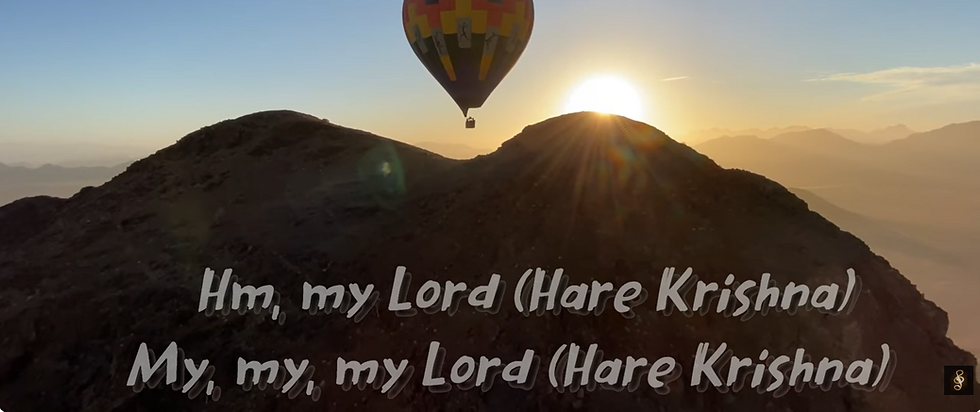
Imagine this next song as a conversation with a G-d of love...


This next video reminds me of a father/son expedition John and I did to the Southwest. Besides a ride in a hot air balloon, in 2016 we got to visit Richard Rohr's Center for Action and Contemplation. (story and photos here)


Go out into the world...and be the change you want to see...


[from the video description] Sit back and watch The Magical Orchestra recreate George Harrison's "Within You Without You." First up, maestro David Amram introduces the classical instruments of India used in the song. This is actually an edit of two incomplete videos: the opening of the song from The Patchogue Theatre for the Performing Arts (2005) and the remainder of the song from The Dix Hills Performing Arts Center (2006). It was a great honor working with two groups of extraordinary musicians.
#God #Men2Men #Brentwood #RichardRohr #Beatles #presence #connection #Eileen #ThomasMerton #MysticalTradition #mysticism #trust #ThomasKeating #CenterForActionAndContemplation #ContemplativeOutreach #Rumi #Franciscan #ThomasBerry #FunctionalCosmology #ThomasSwimme #JBPhillips #WilliamJames #AmyGrant #SteveWinwood #BlindFaith #GeorgeHarrison #JohnTittmann #BeatlesMagicalOrchestra #DavidAmram
#PatchogueTheatreForThePerformingArts #DixHillsPerformingArtsCenter


Comments